
SCI-POP Portraits
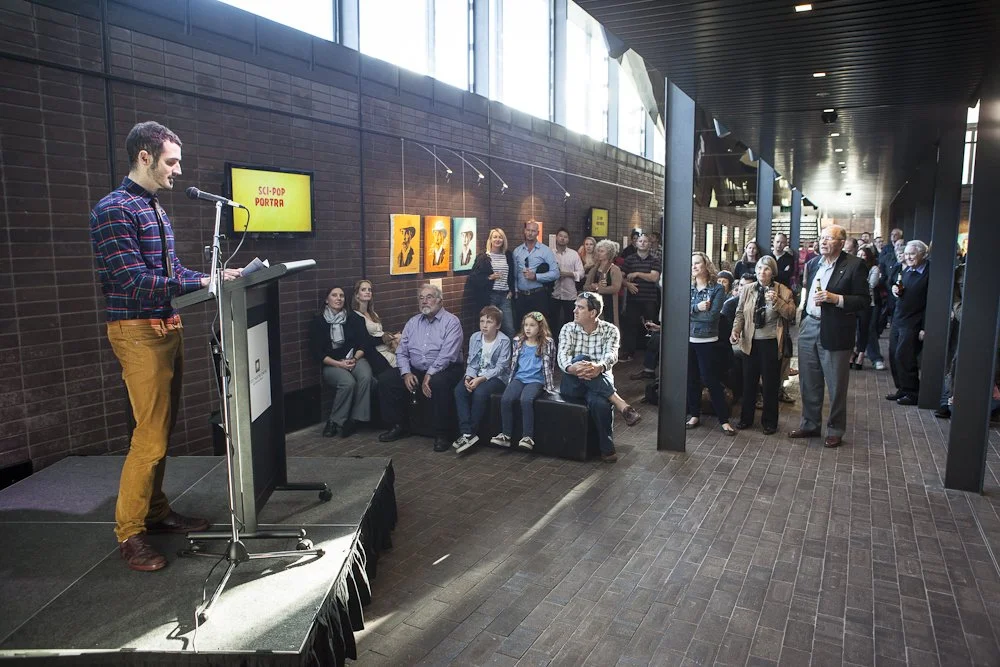
Discover Western Australia’s scientific heritage through silkscreen paintings of the state’s greatest innovators, past and present. Their fascinating stories are brought to life through playful low-fi time-lapse videos.
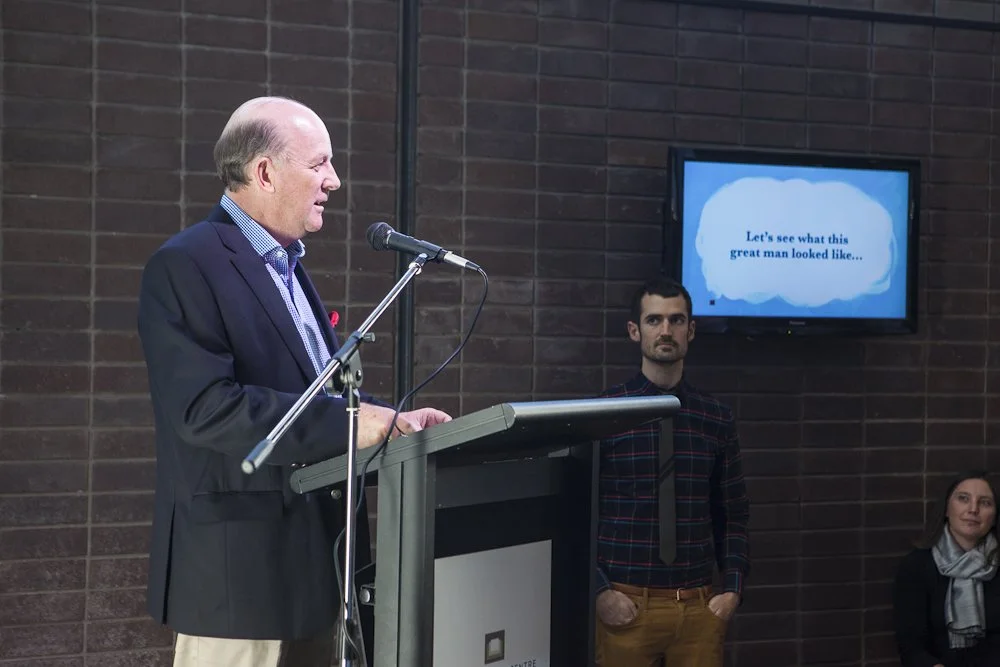
The project was funded by a 2013 National Science Week grant, and the exhibition premiered at the State Theatre Centre’s Underground Foyer Gallery before touring WA.
STATE THEATRE CENTRE OF WA
8–23 August 2013
GERALDTON MUSEUM
24 Oct – 17 Nov 2013
ALBANY MUSEUM
15 Jan – 6 Feb 2014

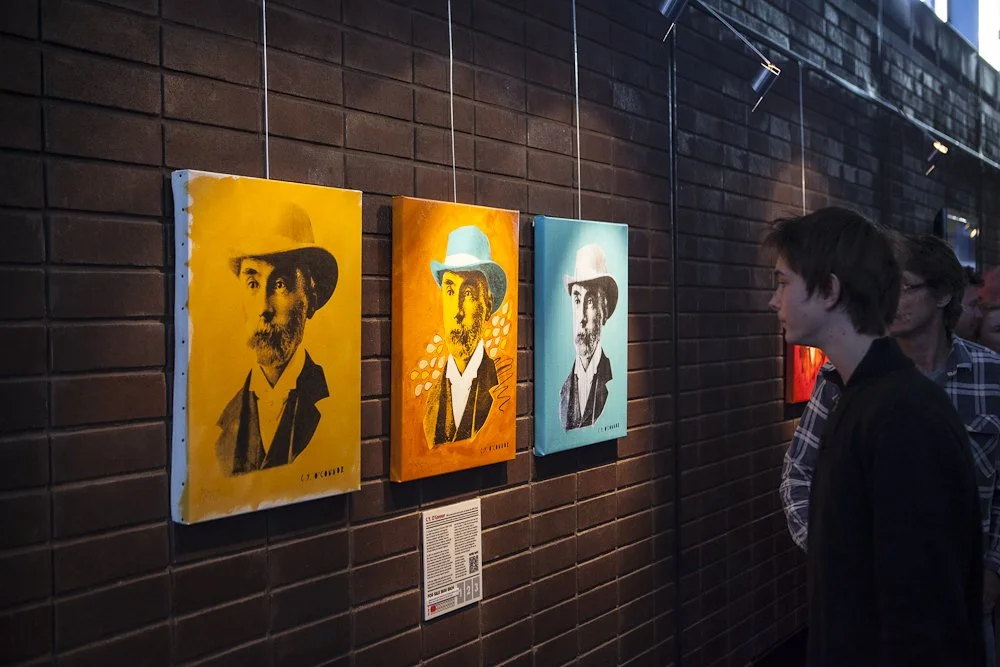
C.Y O’Connor Triptych. Before, during and after the pipeline, Silkscreen acrylic on canvas
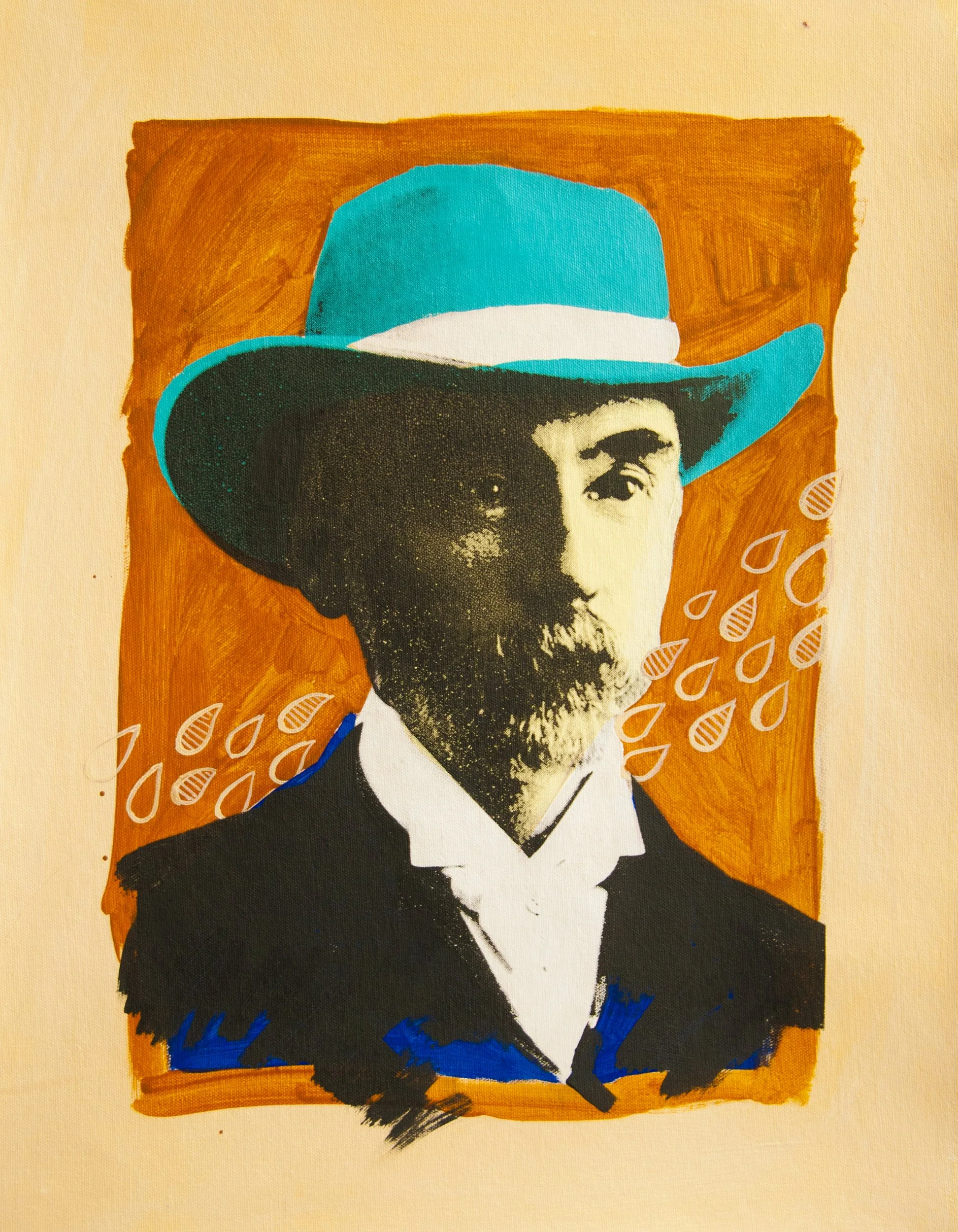
CY O’Connor
Silkscreen print and acrylic on canvas
Image sourced from the collections of the State Library of Western Australia, and reproduced with the permission of the Library Board of Western Australia
CY (Charles Yelverton) O’Connor (1843-1902) was WA’s most famous civil engineer. Born in Ireland, he was apprenticed as a railway engineer until aged 21, when he migrated to New Zealand. There he married and had seven children, eventually becoming New Zealand’s Undersecretary of Public Works and Marine Engineer. In 1891 he relocated to WA to become the colony’s Engineer-in-Chief. At that time, there were no large engineering or construction companies, the Government had to oversee any major projects itself. O’Connor’s first project was the construction of Fremantle Harbour at the mouth of the Swan River, which he did very successfully in the face of contrary ‘expert’ opinion. In the late 1880s many gold discoveries had been made in the desert country around Kalgoorlie, over 500 km to the east of Perth, and the booming population there was very short of water. In 1896, the WA Government raised a huge loan to build a dam at Mundaring in the Perth Hills and a pipeline to Kalgoorlie, a major engineering project for those times. O’Connor built the pipeline (still the world’s longest) very successfully, again in the face of constant criticism, which caused him to suicide just before the flow of water reached Kalgoorlie. O’Connor rode his horse into the sea at Fremantle and shot himself. A Perth suburb, a technical college, the lake created by Mundaring Weir, a beach (where he committed suicide) and an electoral area are named after him.
See how it was made
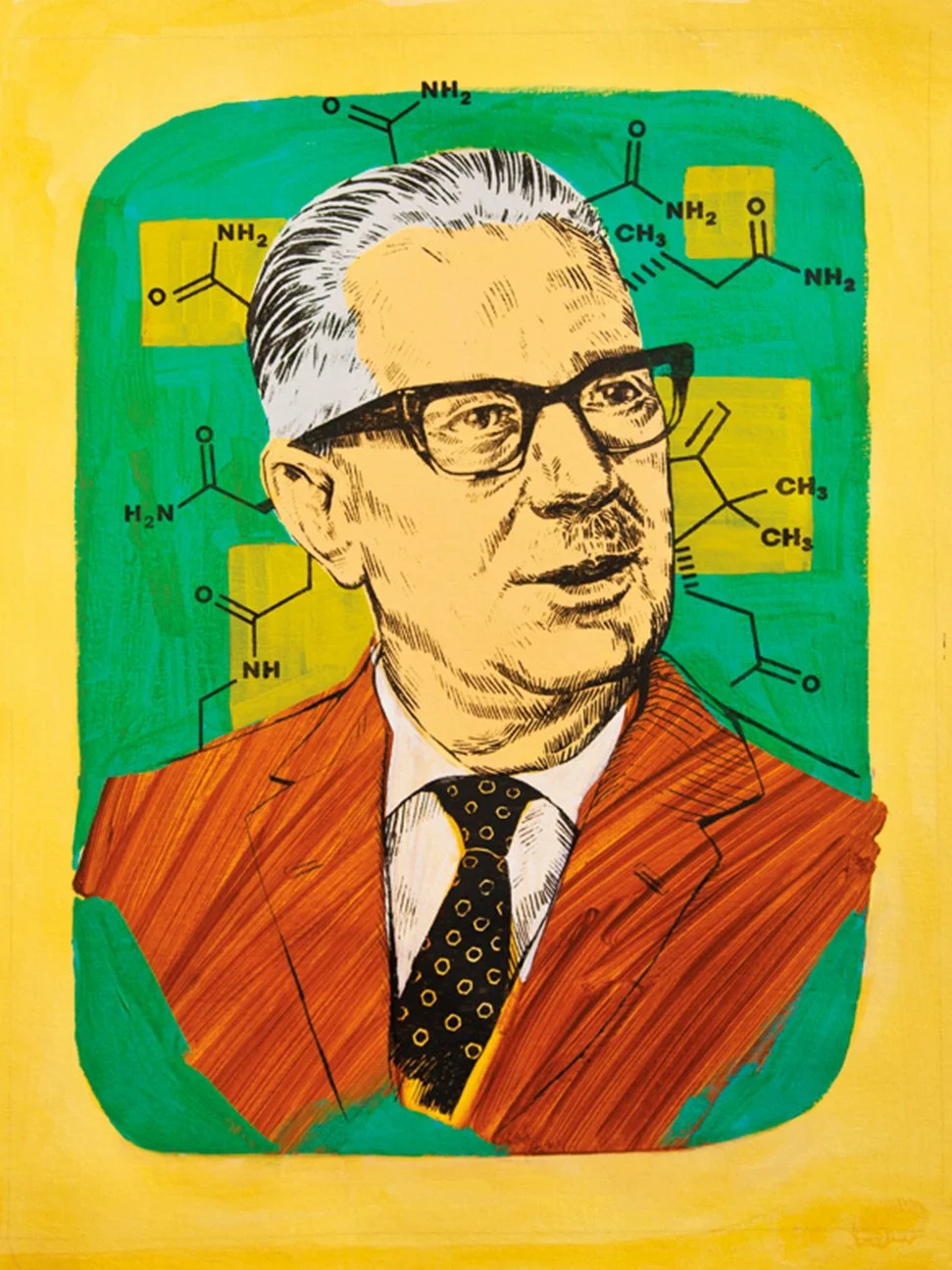
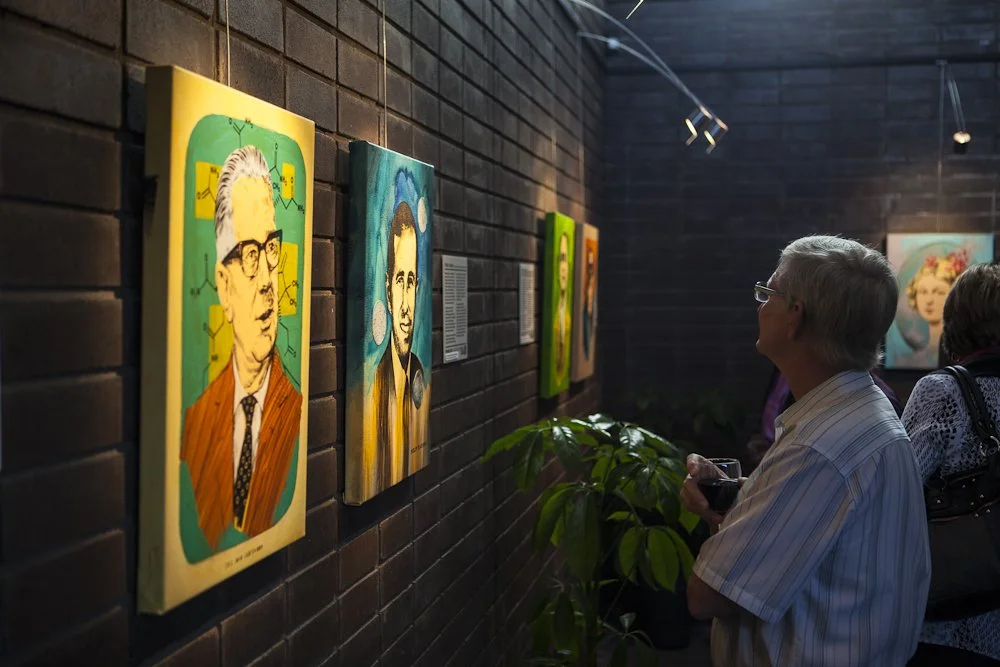
Eric Underwood
Silkscreen print and acrylic on canvas.
Eric Underwood (1905-1980) was Western Australia’s most famous agricultural scientist. He was born in London, but came to WA at age 8 to join his father James, who had migrated earlier and set up a saddle shop and orchard in Mount Barker. Eric won scholarships to study at Perth Modern School and at the University of WA, where he gained an honours degree under Prof. John Paterson (Miles Noel’s great-grandfather). He did outstanding research work with the WA Department of Agriculture on pastures and grazing-animal nutrition, and continued this with a scholarship to Cambridge University’s Animal Research Institute. On returning to Australia in 1931, he discovered that a cattle disease called ‘Denmark Wasting Disease’ was actually due to a deficiency of the element cobalt. This was essential in making vitamin B12 (molecular structure in background of portrait). Eric’s career, right up to his death in 1980, was marked by outstanding research successes, widely-appreciated lecturing techniques, and a wealth of publications, including two books, on animal nutrition, which made him a world authority. In 1946, Underwood was appointed Professor of Agriculture, Dean of the Faculty of Agriculture, and Director of the Institute of Agriculture at UWA. Over a long career, he worked tirelessly with colleagues at UWA, and in CSIRO and the WA Department of Agriculture, to solve many problems and establish WA’s agricultural industry on a firm scientific and business basis.
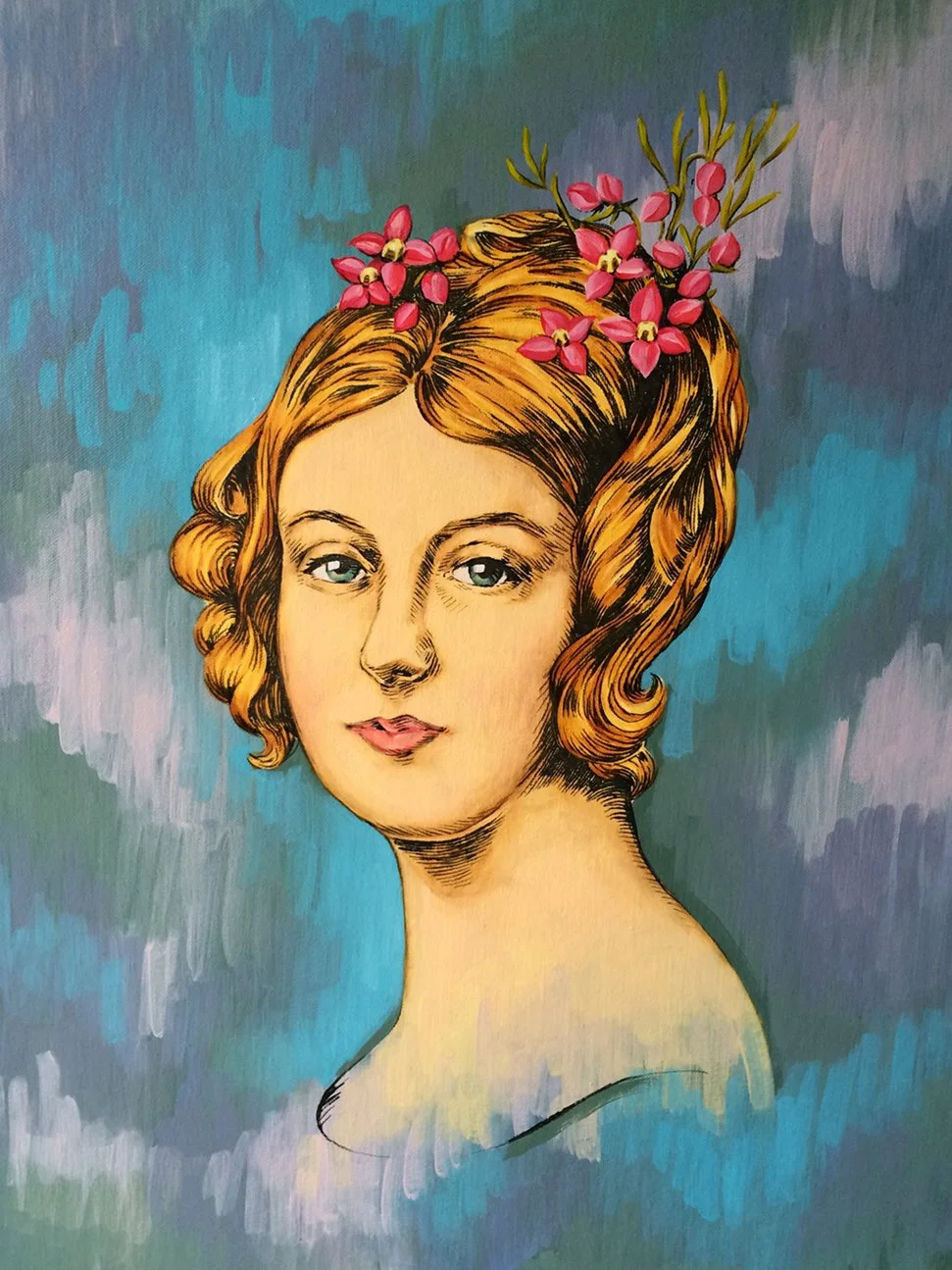
Georgiana Molloy
Silkscreen print and acrylic on canvas
Image sourced from the collections of the State Library of Western Australia, and reproduced with the permission of the Library Board of Western Australia
Georgiana Molloy (1805-1843) was Western Australia’s earliest systematic botanist. Born in England, in 1829 she married Captain John Molloy, and soon after the Molloys migrated to the Swan River Colony, as WA was then known. The early settlers’ lives were hard, and she found life difficult, but in 1836 the English botanist James Mangles wrote to her asking her to collect botanical specimens for him. Georgiana found she had great natural skills in collecting and organizing seeds and pressed native plant specimens, which she sent to Mangles. From the seeds, many new WA species were grown in England (including the eucalypt Marri), while the pressed specimens greatly helped classification botanists. Georgiana did her early botanical work in Augusta, where her husband was the first magistrate. She taught herself systematic botany, and made use of local Aboriginal plant lore. In 1839 the family moved to Busselton, where she was visited by botanists from Europe. Child-bearing was much more chancy in those days, and Georgiana died at age 37 shortly after her seventh child was born. The Molloy name is remembered in Molloy Island near Augusta, in the shrub Boronia molloyae (flowers of which are woven in her hair in the portrait), in a street in Canberra, and in the Georgiana Molloy Anglican School in Busselton.
See how it was made
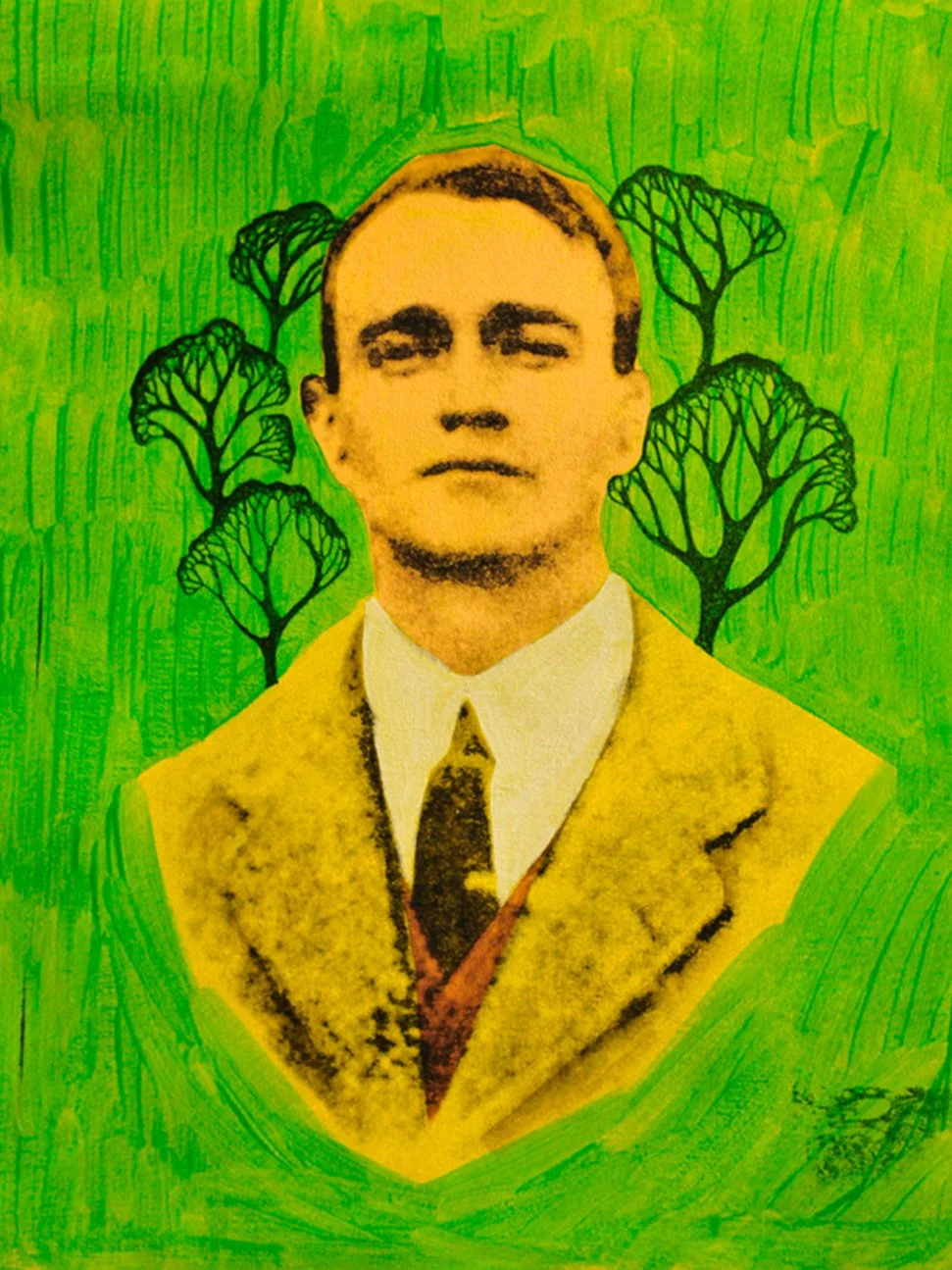
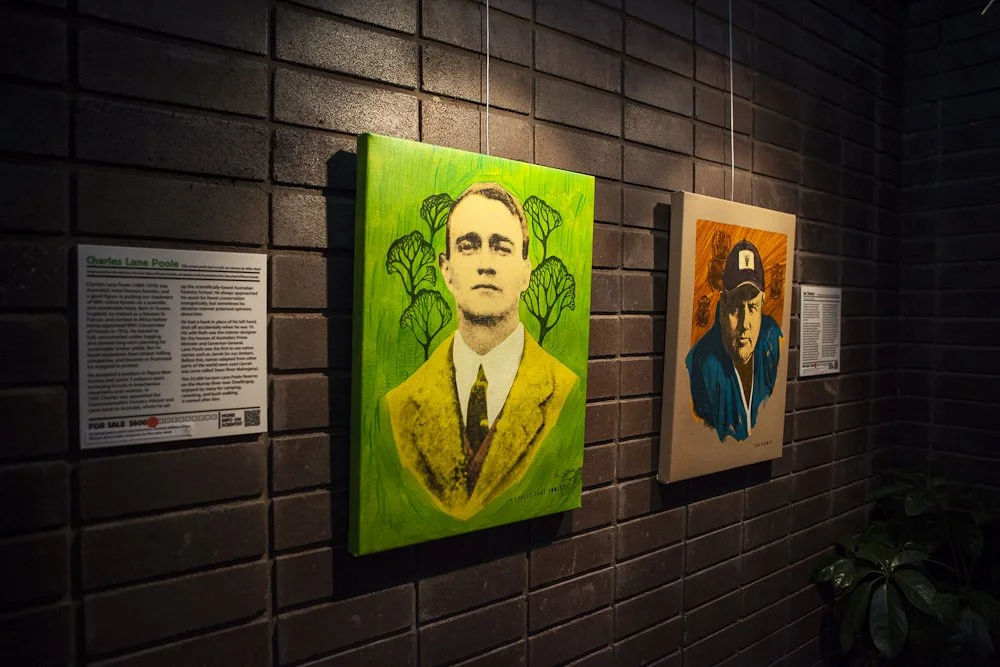
Charles Lane Poole
Silkscreen print and acrylic on canvas.
Image sourced from the collections of the State Library of Western Australia, and reproduced with the permission of the Library Board of Western Australia.
Charles Lane Poole (1885-1970) was Australia’s most famous forester, and a giant figure in putting our treatment of WA’s native forests on a scientific and sustainable basis. Born in Sussex, England, he trained as a forester in France, and worked in Africa before being appointed WA’s Conservator of Forests in 1916. He moved to halt uncontrolled settler logging and started long-term planning for sustainable timber yields. But he faced opposition from timber milling companies, and became so frustrated he resigned in protest. He accepted a position in Papua New Guinea and spent 3 arduous years surveying forests in treacherous mountains and swamps. In 1925 Charles was appointed the Commonwealth’s Forestry Adviser and came back to Australia, where he set up the scientifically-based Australian Forestry School. He always approached his quest for forest conservation energetically, but sometimes his abrasive manner polarised opinions about him. He had a hook in place of his left hand, shot off accidentally when he was 19. His wife Ruth was the interior designer for the houses of Australia’s Prime Minister and Governor-General. Lane Poole was the first to use native names such as Jarrah for our timbers. Before this, names adapted from other parts of the world were used (Jarrah was once called Swan River Mahogany). The 55,000 hectare Lane Poole Reserve on the Murray River near Dwellingup, enjoyed by many for camping, canoeing, and bush walking, is named after him.
See how it was made
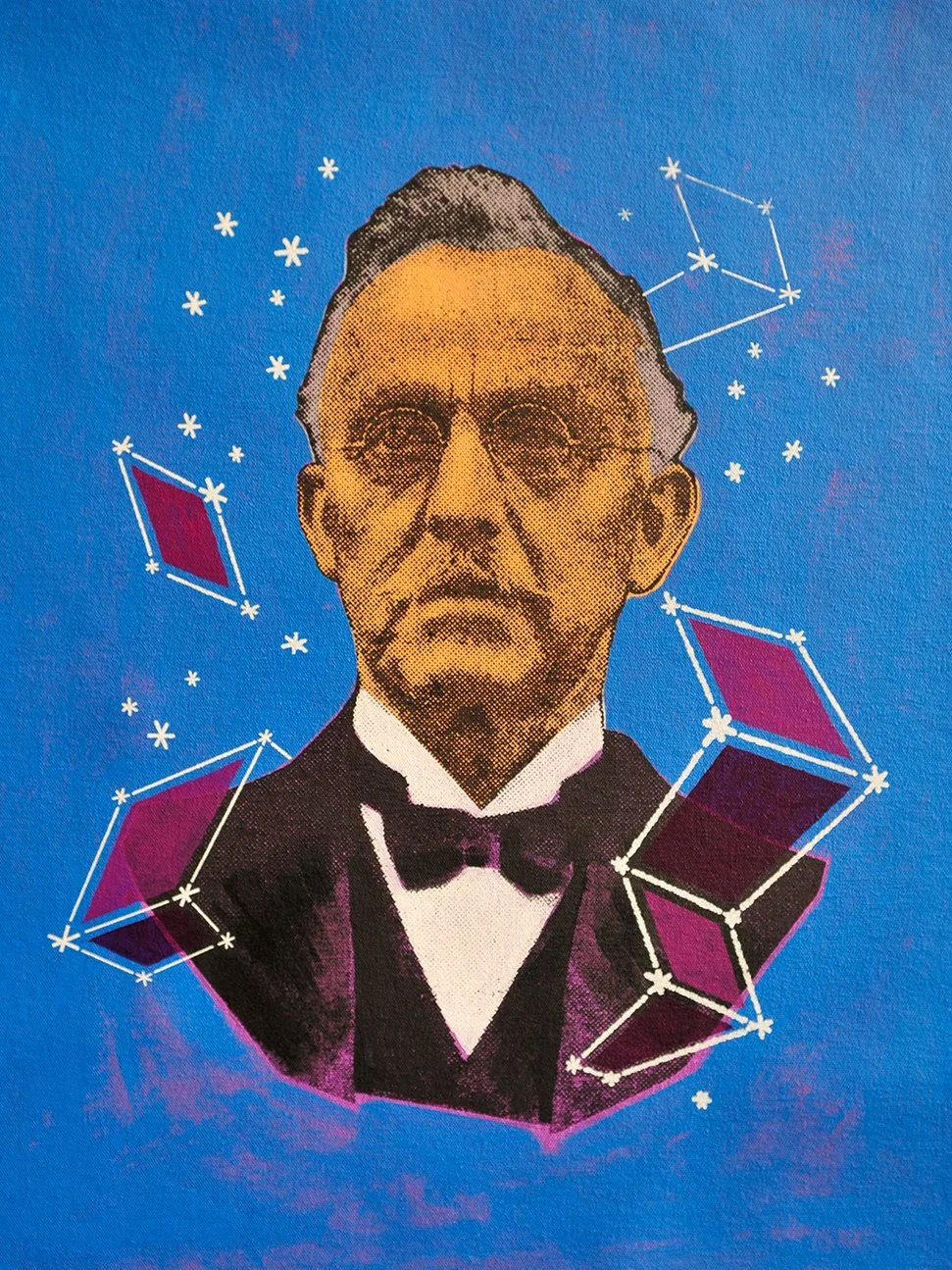
William Ernest Cooke
Silkscreen print and acrylic on canvas
Image sourced from the collections of the State Library of Western Australia, and reproduced with the permission of the Library Board of Western Australia.
William Ernest Cooke (1863-1947) was WA’s first professional astronomer and weather scientist. Born and educated in Adelaide, he combined university studies with working at the Adelaide Observatory, under Sir Charles Todd. In 1894, WA Premier Sir John Forrest wanted to build a high-quality Perth Observatory, and asked Todd to advise. Todd chose a site in Perth just above the present Parliament House, and recommended his Assistant, Ernest Cooke, as the new WA Government Astronomer. Cooke was sent to study observatories and buy instruments in Europe. The building was finished in 1897, with the first telescopes working in 1898, although Cooke established a meteorological station at the site before this. Starting in 1901, Cooke’s observatory took part in an international star charting and cataloguing project, using over two million star images captured on photographic plates, and extensive calculations. It resulted in a Star Catalogue for the 32°-40° South Latitude part of the sky allocated to Perth, which produced international acclaim for its efficiency and accuracy. In 1900, as Government Meteorologist, Cooke established scientific weather forecasting and accurate clock time in WA (a time ball and a time gun both went off at exactly 1.00 pm). A weather report and forecast was posted each morning in Perth and Fremantle. Cooke developed a method of plotting tropical cyclones and issuing cyclone alerts to shipping, and had over 100 inventions patented, including a heliochronometer used to determine local time and true north accurately. Cooke left WA in 1912 for an astronomer post in NSW. He died back in Adelaide.
See how it was made
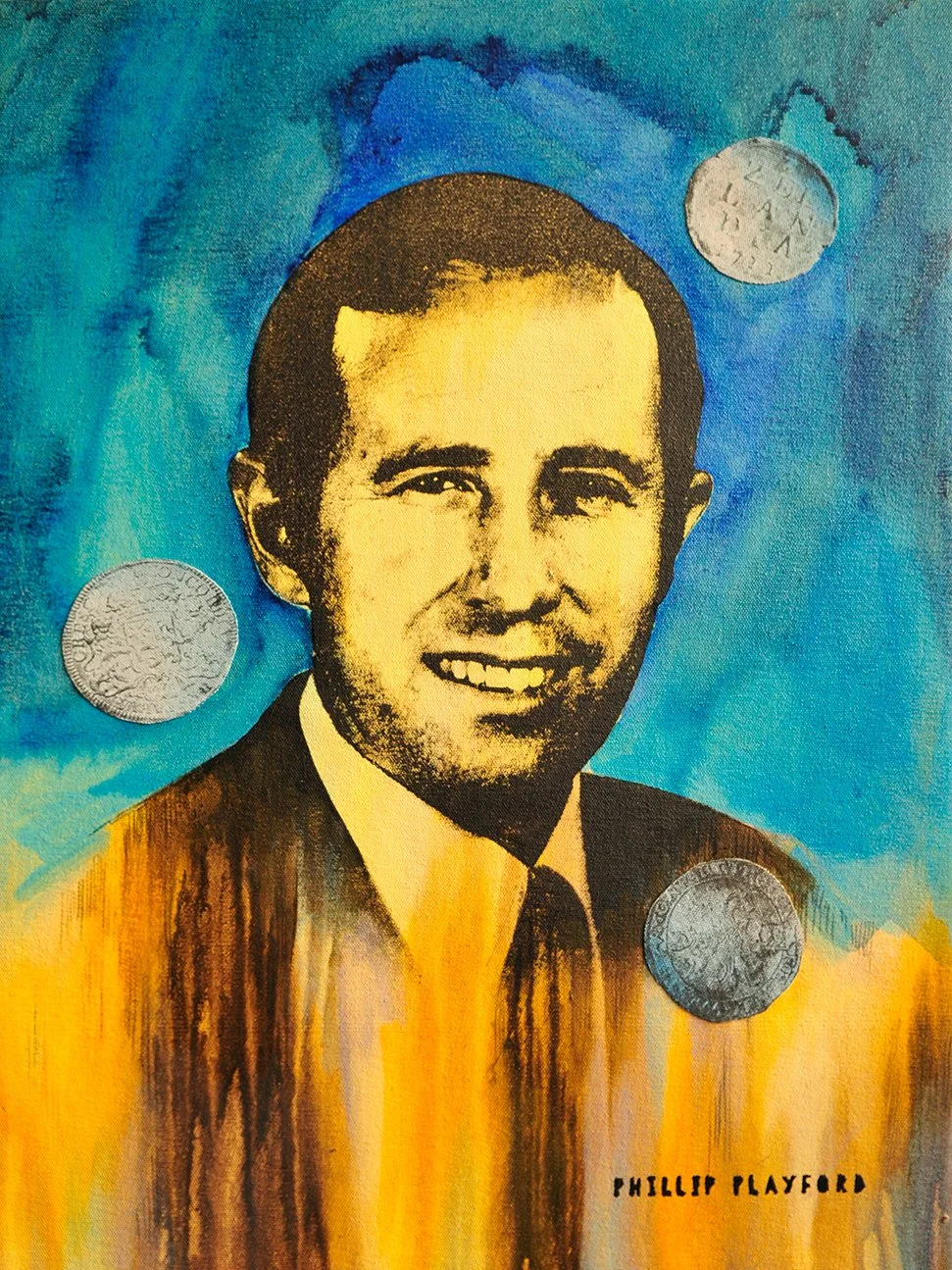
Phillip Playford
Silkscreen print and acrylic on canvas
Phillip Playford (b. 1931-2017) is WA’s best-known geologist. He was born and brought up in Perth, and studied at Perth Modern School, the University of WA, and Stanford University. At that time, in the 1950s, there were very few geologists in the State, and the great iron ore, gas, oil, and diamond discoveries were yet to come -- WA was still a wheat and sheep economy. Dr Playford has had a notable geological career, working for WAPET (the WA petroleum company responsible for WA’s first oil discovery), and for the WA Government (as Director of the Geological Survey). His scientific work has had wide impacts, both in Australia and overseas. But Dr Playford is best known for things outside the straight geological area. At age 22, whilst working around Shark Bay, he pursued leads from an elderly stockman about ruins of a shipwreck nearby. His trained eye identified the remains as those of the Dutch ship ‘Zuytdorp’, which had disappeared after leaving southern Africa in 1712. The ship carried a rich cargo of some 250,000 guilders – including ducats and pieces of eight. He researched Aboriginal cave paintings and tribal cultures in the Kimberley as early as 1958. And today, more than 50 years later, he has shown that giant tsunamis (up to 35 metres high, and moving rocks weighing 700 tons) have hit WA coastal areas north of Dirk Hartog Island in the recent past, almost certainly causing huge loss of life among the Aborigines. And they could strike again, at any time.
See how it was made
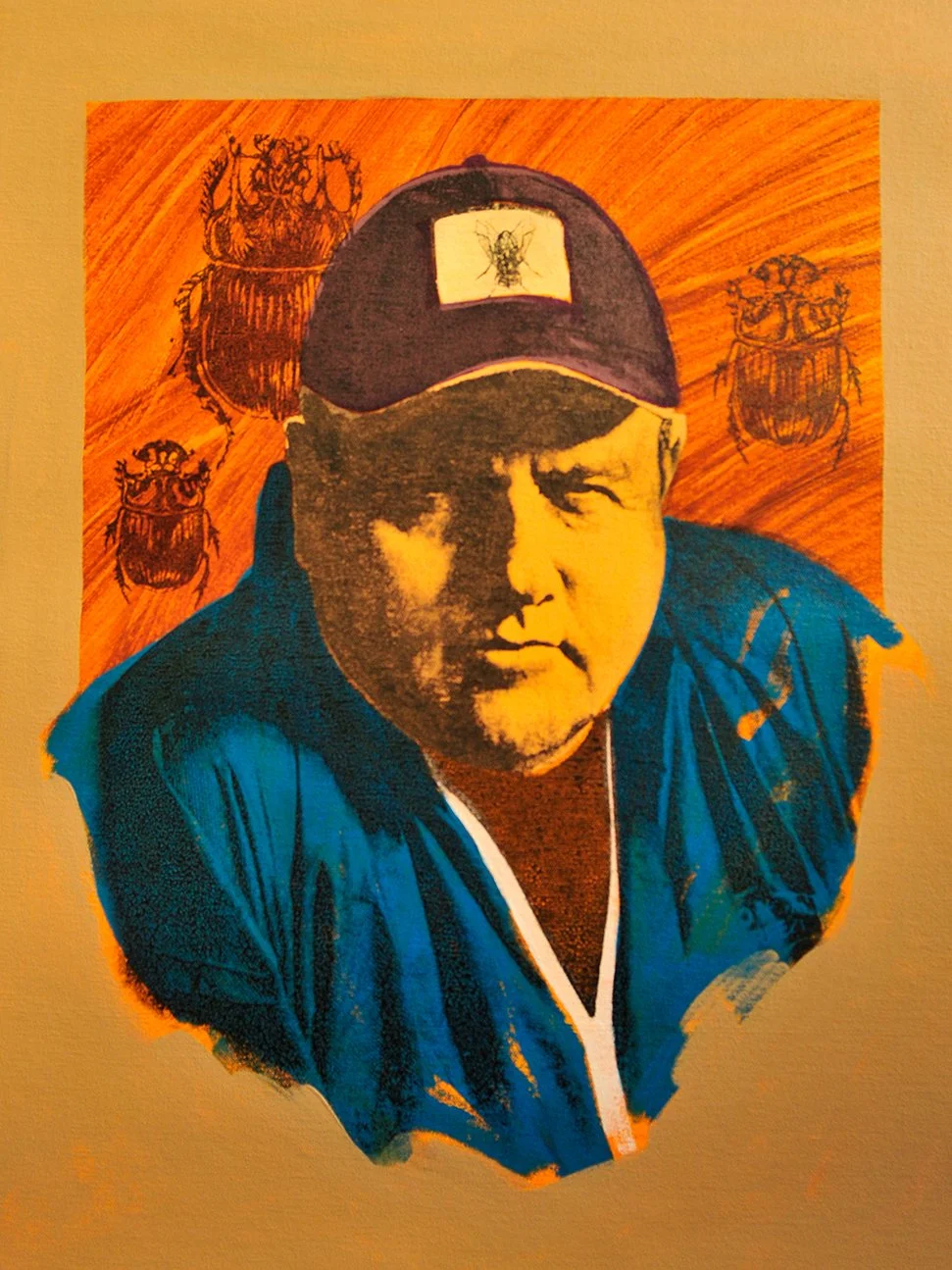
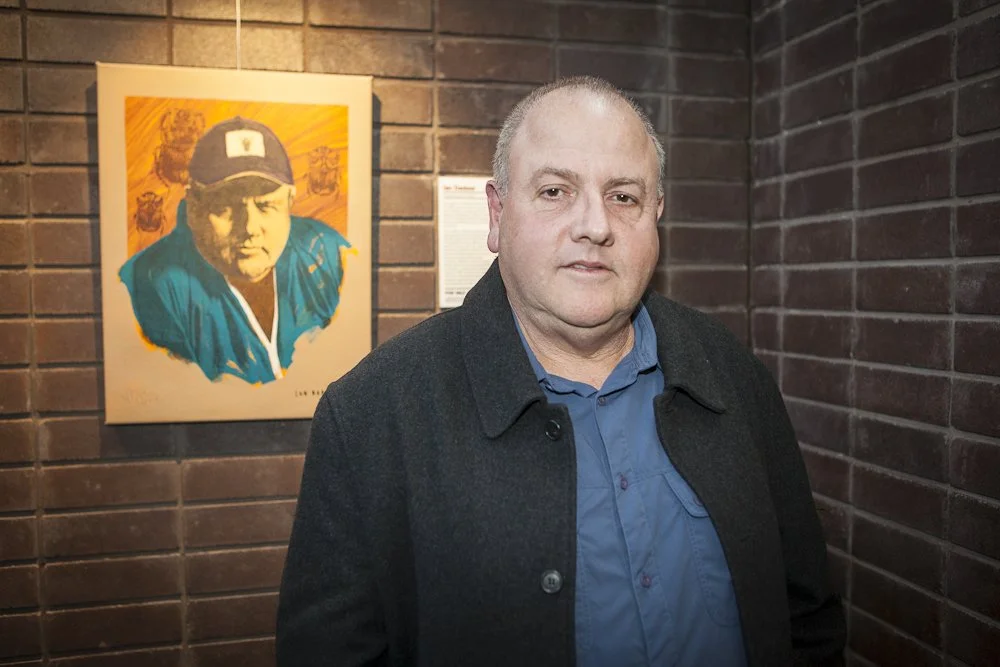
Ian Dadour
Silkscreen print and acrylic on canvas.
Photograph by Frances Andrijich.
Ian Dadour (b. 1956-now) has devoted his scientific career to insects. He grew up in Subiaco and gained a PhD on behavior and genetics of Bush Crickets at the University of Western Australia. The unusual family surname is French/Armenian. From 1988 to 1998, Ian did far-reaching development work on Dung Beetles with the WA Department of Agriculture. Dung beetles are very effective at burying animal manure, which can dramatically reduce the numbers of fly pests which annoy and spread diseases in humans and animals (and deter tourists). To achieve effective control, 55 dung beetle species have been established in Australia, working during different seasons. In WA, spring-active beetles need to be introduced, however, a 2010 proposal supported by Ian, to do this was rejected by the WA Government.
See how it was made
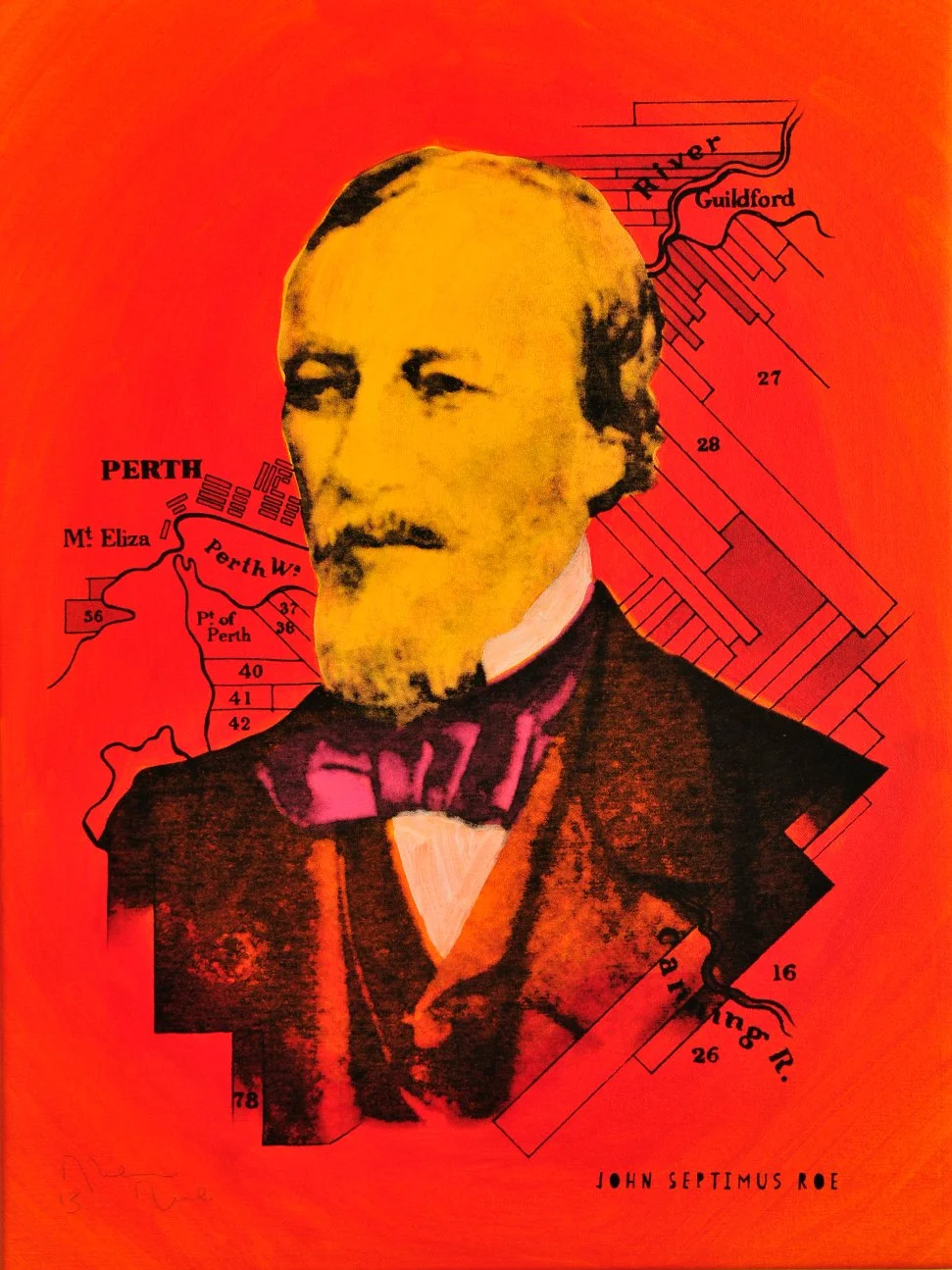
John Septimus Roe
Silkscreen print and acrylic on canvas.
Image sourced from the collections of the State Library of Western Australia, and reproduced with the permission of the Library Board of Western Australia.
John Septimus Roe (1797-1878) was an explorer, surveyor, and government figure who set the pattern of Western Australia from its first days as a colony. Selected and trained as a surveyor by the British Navy at age 15, Roe worked on exploring and surveying voyages right around Australia from 1813 to 1827. In 1829 he was appointed Surveyor-General of Western Australia, and came out to what is now Perth on the Parmelia, the first ship sent to start the colony of WA. He laid out the sites of Perth and Fremantle, surveying all the new blocks with just one assistant. From 1829 to 1848, he undertook no less than 15 explorations and surveys within the State, one lasting five months, from Albany in the south to Champion Bay near Geraldton in the north. He also inspired and directed other expeditions, including one led by John Forrest, and has been described as the “father of Australian explorers”. He served in the West Australian Parliament for almost 40 years, and founded both Kings Park and WA’s first technical organization, the Swan River Mechanics Institute, the forerunner of both the State Library of Western Australia and the WA Museum.
Eight WA localities, two plants, a school, and a mollusc are named after him, and his life-sized statue stands on the footpath at the junction of St Georges and AdelaideTerraces in Perth.